
Termite Treatment
Complete Termite Protection
TERMINATE treatment comprises of two types:
- Post Construction Anti Termite Treatment.
- Pre Construction Anti termite Treatment.
Post Construction Anti Termite Treatment:
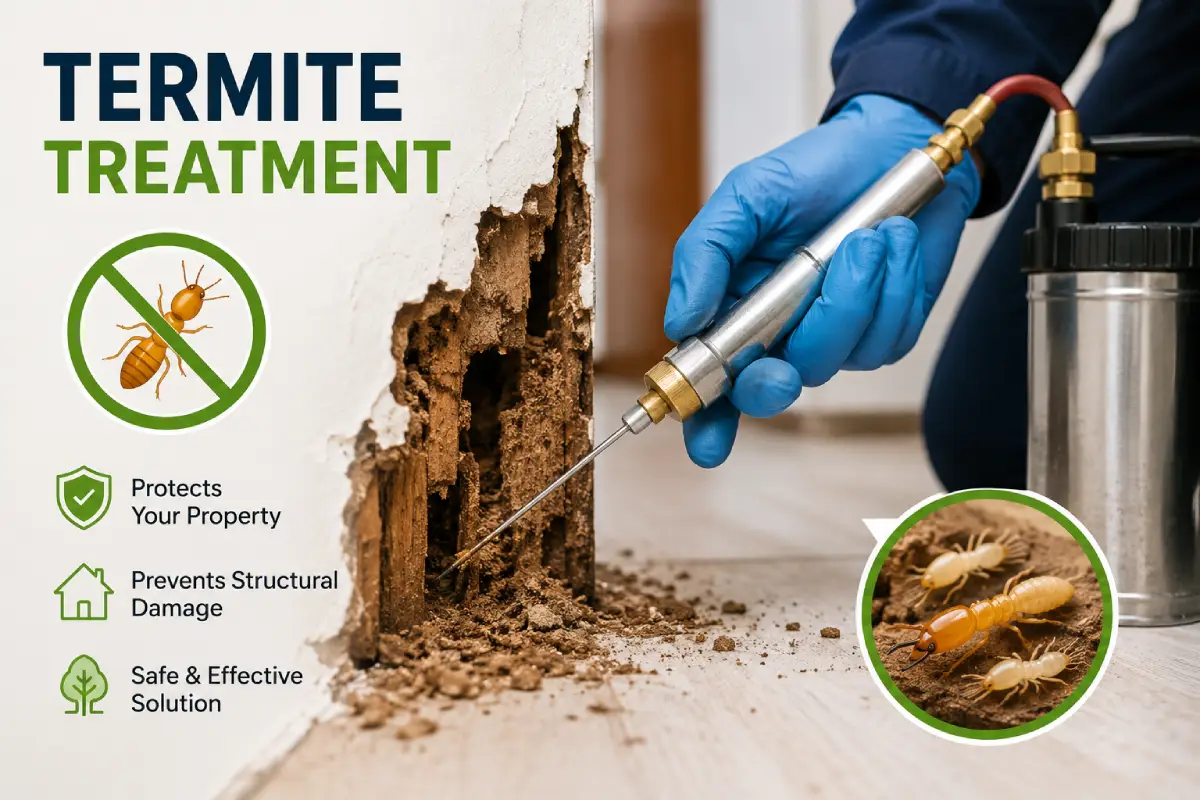
It comprises of drilling holes in the junction of floor and wall, soaking them with the termiticide and sealing them. This makes a completely undetectable chemical barrier around your property. Termites unknowingly forage through treated area, quickly passing the termiticide throughout their population. This leads faster control of termites.
CONTROL METHODS
The control methods consist of creating continuous chemical barrier between the structure and the contact point with the soil. This prevents the entry of termites in to the building from the soil and forces to move them to other area. Below the soil it’s practically impossible to find out the main source or location of the colony.
How chemical barrier is created? The standard method employed all over the world to create chemical for existing structure is to drill holes at wall and floor junction at the interval of one foot and pump in temiticides. The holes are sealed with cement after injecting sufficient quantity of chemical. The expansion joints and all utility lines are also treated with the chemical to cut off all possible entry points for the termites. To carry out this treatment it is essential to have clear access to all the walls present in the building at ground floor.
Pre Construction Anti termite Treatment:
It comprises of different Specifications for different stages, for which we follow IS-CODE {IS 6313 (Part-II)} and our own researched & developed methods.
Treatment for buildings without Basement:
- Treatment to top surface of plinth filling
- Treatment at junction of wall and floor
- Treatment of soil along external perimeter
- Treatment of soil surrounding pipes, wastes and conduits
- Treatment of expansion joints
Treatment for Basement structures/load bearing structures:
- Treatment to soil below raft/foundation
- Treatment to soil along the retaining wall
- Treatment to soil along the external perimeter of the building
- Treatment of soil surrounding pipes, wastes and conduits
- Treatment under the apron provided, if any
What are Termites?
Termites belong to group of social insects living in colonies having different casts, performing different functions and look different from each other.
The colony consists of Queen and King living in the underground cellar, where as workers move out in search of food that is anything containing cellulose in the soil and above ground structure. The queen may live for more than 25 years and is capable of laying more than 25000 eggs per day depending on availability of food. Where as workers live for up to 3 years and are blind and sterile, they work for 24 hours and are responsible for destruction and damage.
Subterranean termites have a cryptobiotic or "hidden" lifestyle. This means that they are always hidden from our view either beneath the surface of the soil, beneath the surface of the wood, or in their mud tunnels.
This cryptobiotic nature contributes to their success in invading human structures. The termites enter our buildings from beneath the soil surface and forage within the wood. We usually do not detect their presence until damage becomes evident or termite swarming takes place. Often we have no idea how the termites got into the structure. This can make it very difficult to control them.
PLEASE NOTE
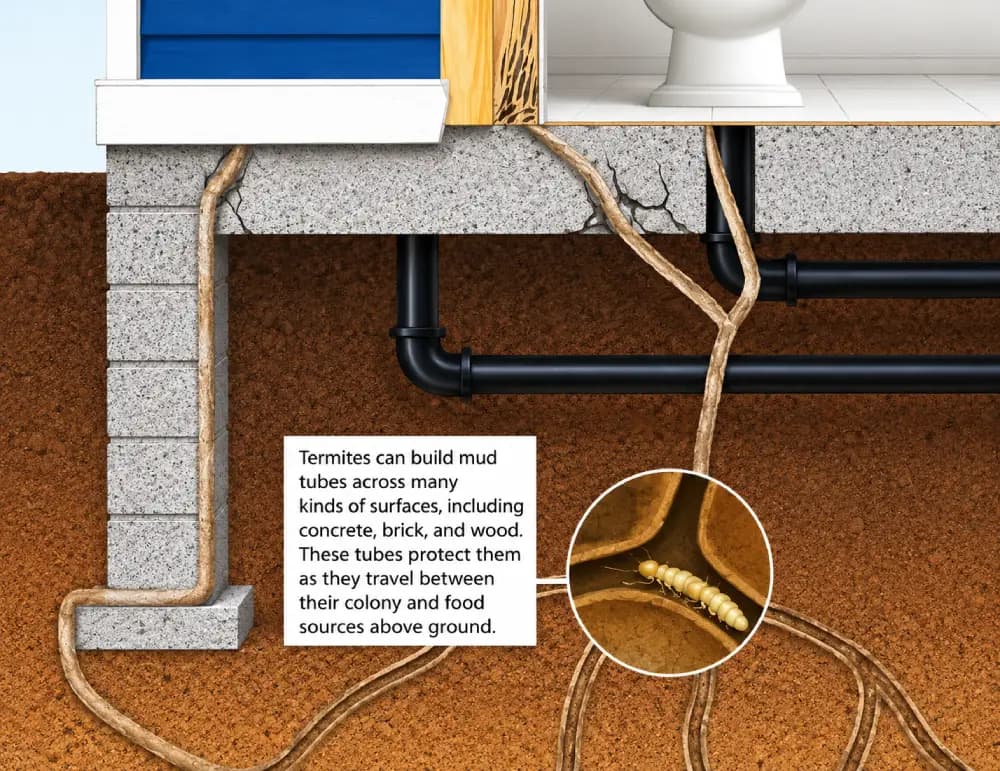
Most of the time the termite damage remains hidden and is not noticed till major damage had already taken place. The termites are hidden invaders enter the buildings through the natural cracks and crevices in the structures. They also construct mud tubes as pathways. The presence of mud tubes is the sign of Termite infestation.
In most of the situations the extensive damage to the property is noticed due to the termite attack and is irreparable one. In some of the cases the live termites are seen in the areas where the services are to be provided.
Indicators of Infestation:
A subterranean termite infestation is usually recognized by the following 3 indicators:
- Mud tubes: The termite foraging tubes extend from the ground to the infested wood. The tubes provide shelter for the foraging termites. The tubes are muddy looking in appearance, flattened and about the width of a pencil. They are most obvious when they extend over concrete foundations and other exposed surfaces. However, the tubes are often less visible, running along cracks, underneath flooring, or behind siding and baseboards.
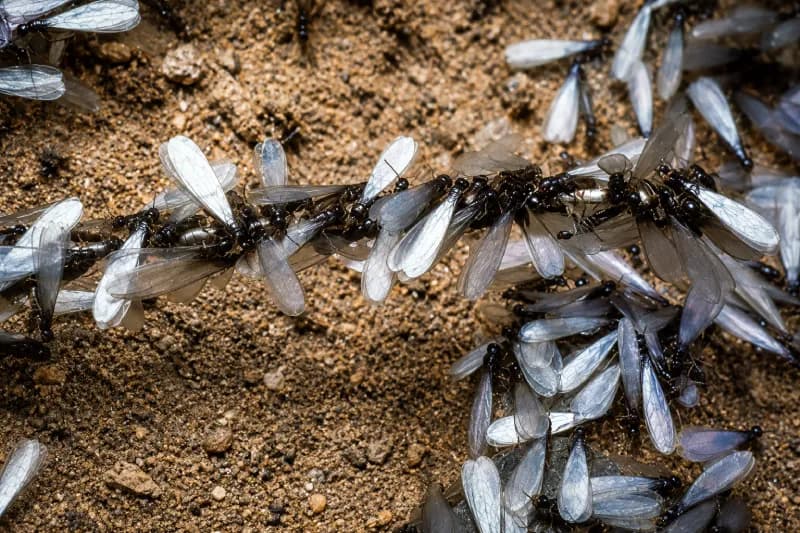
- Swarmers: Winged termites emerging indoors or outside from swarming tubes immediately adjacent to the structure are often the first sign of a subterranean infestation. Swarming termites are attracted to light. Therefore, Swarmers indoors are often found around lighting fixtures, windows, doors and vents. Also, large numbers of discarded termite wings on windowsills, floors or in spider webs are a sure sign of infestation.
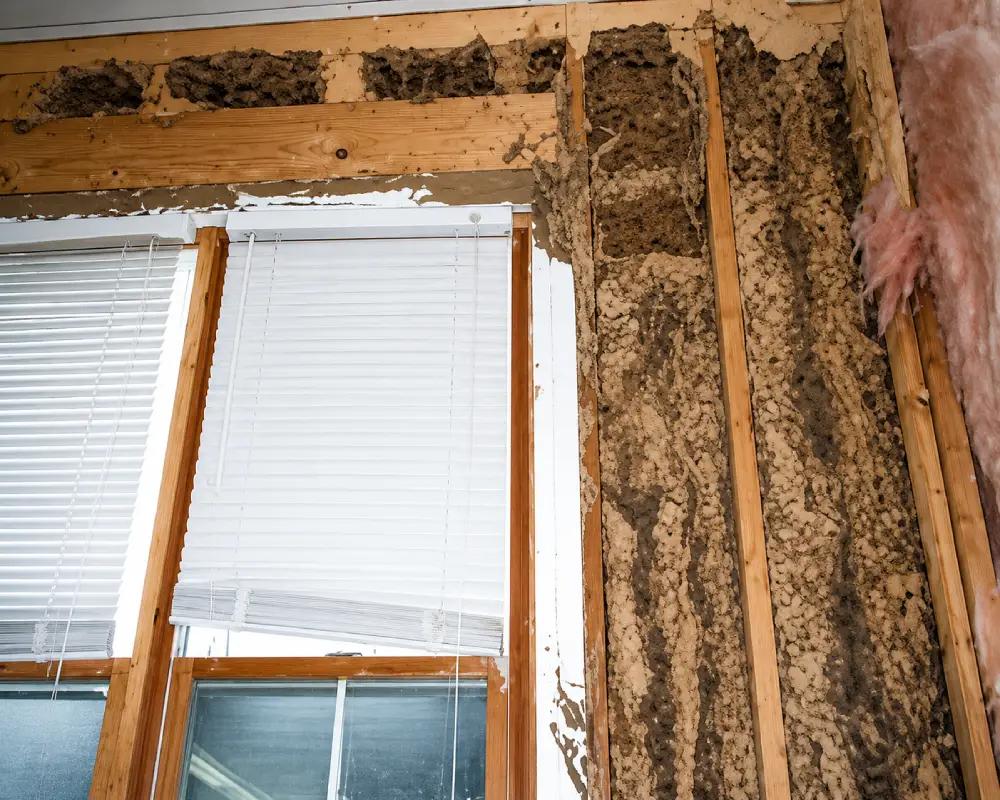
- Wood Damage: A common indication of subterranean infestation is the presence of dark areas or blisters in wood flooring. However, subterranean termite damage can go unnoticed. Because the termites only eat the internal part of wood leaving the grain and exterior surface intact and filling the eaten portion with soil to prevent it from collapsing. However, the galleries can be detected by tapping the wood every few inches with the handle of a screwdriver. The damaged wood sounds hollow and the screwdriver may even break through the wood into the galleries. If the galleries are active the worker termites will be observed inside.
Need this service?
Contact our experts today for a free consultation and quote.
+91 8810664498Message on WhatsApp